
The Kukatpally Parent’s Guide: Finding the Best Schools for Holistic Growth and Academic Excellence
Achieving the perfect balance between academic rigor and holistic development.
Aspirational parents in Kukatpally, KPHB, Nizampet, and Pragathi Nagar looking for primary and high school admissions for the 2026 academic year.
If you are raising a child in Kukatpally today, you are parenting in one of the most dynamic, fast-paced, and competitive micro-markets in Hyderabad. Surrounded by IT parks, bustling tech hubs, and a community of highly educated professionals, the local culture places an immense premium on success.
Naturally, when it comes to school admissions, Kukatpally parents want the best. But what does “the best” mean in 2026?
Ten years ago, the answer was simple: the school that produced the highest board exam toppers or the most IIT-JEE rankers. Today, however, parents are experiencing a profound mindset shift. We watch Artificial Intelligence write code and draft essays in seconds, and we realize that memorizing a textbook is no longer a competitive advantage.
We still want Academic Excellence, but we are no longer willing to sacrifice our children’s mental health, creativity, or physical well-being to get it. We want Holistic Growth.
But in a market flooded with schools claiming to offer “360-degree development,” how do you separate the marketing buzzwords from reality? How do you find a school in Kukatpally that genuinely delivers both?
Here is a practical guide to decoding what academic excellence and holistic growth truly look like when they work together.
1. Redefining "Academic Excellence" Beyond the Report Card
In traditional schooling, academic excellence was defined by rote memorization. If a child could perfectly reproduce an essay on the water cycle, they were awarded an ‘A’.
Today, true academic excellence is defined by Competency and Application. It is not about what you know; it is about what you can do with what you know.
When evaluating schools in KPHB or Vivekananda Nagar, look for an educational model that challenges higher-order thinking.
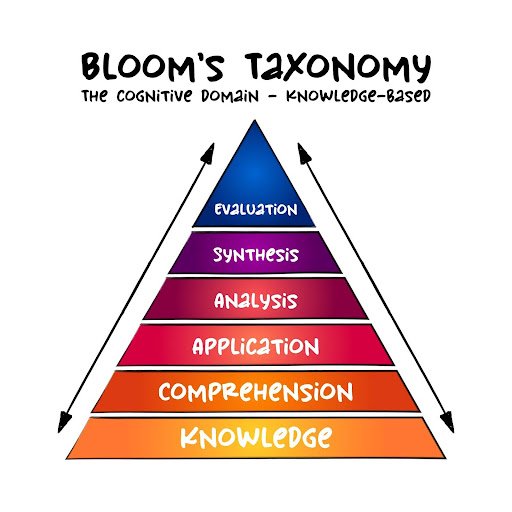
- Do they stop at “Remembering”? Or do they push students toward “Analyzing” and “Creating”?
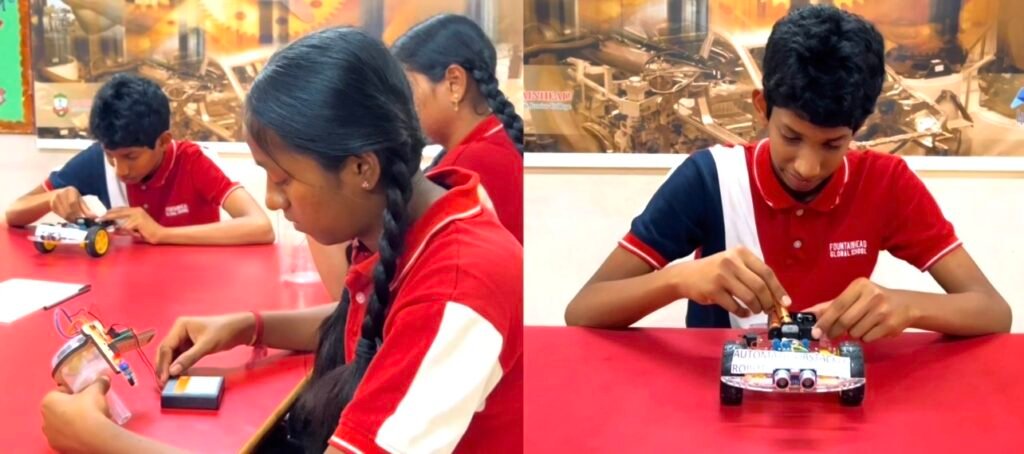
- Experiential Learning: A school committed to true academics will not just teach the theory of magnetism on a blackboard. They will hand the children magnets, batteries, and wires, asking them to build a temporary electromagnet.
- Conceptual Clarity over Speed: Beware of schools that boast about finishing the Grade 6 syllabus while the child is in Grade 5. Rushing through textbooks creates a fragile foundation. True excellence requires moving at a pace that allows for deep, conceptual mastery.
2. Decoding "Holistic Growth": It’s More Than Just a Sports Period
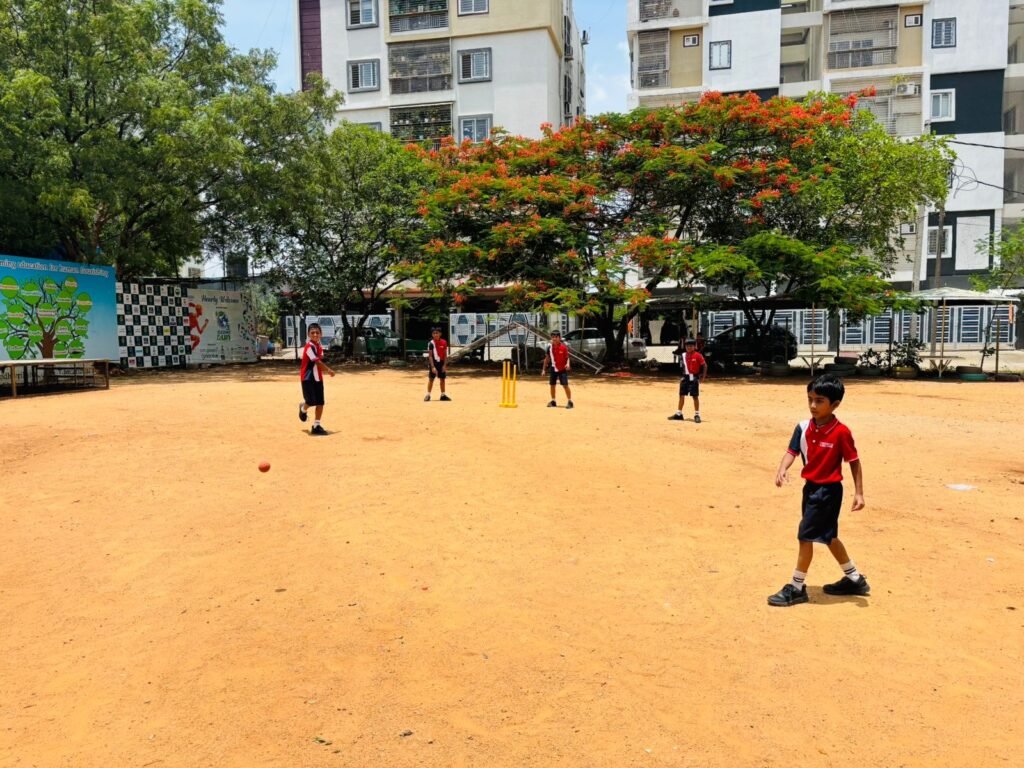
Many schools treat “holistic growth” as an add-on. They have a standard academic timetable, and they sprinkle in a 40-minute games period or a weekly art class to tick the “holistic” box.
True holistic education recognizes that a child is a complex human being with multiple facets of intelligence.
To foster genuine holistic growth, a school must cater to the whole child:
- Cognitive (The Mind): Building logic, curiosity, and critical thinking.
- Physical (The Body): Developing gross motor skills, stamina, and an understanding of lifelong health. This means structured sports programs with actual coaches, not just a free period on a dusty playground.
- Emotional (The Heart): This is the most neglected pillar. Does the school have a framework for teaching Emotional Intelligence (EQ)? Are children taught how to resolve conflicts, manage exam anxiety, and develop empathy?
- Creative (The Spirit): Providing spaces—like tinkering labs, music rooms, and open art studios—where there is no “right or wrong” answer, only expression.
3. The Danger of the "Split Paradigm" in Kukatpally
A common trap for parents in the Kukatpally corridor is the “Split Paradigm.” This happens when a parent chooses a highly rigid, academics-only school and then tries to compensate by enrolling the child in evening classes for swimming, weekend classes for robotics, and online classes for public speaking.
Why this fails:
- Burnout: Your child is shuttling through traffic from JNTU to Nizampet at 6:00 PM after an exhausting school day. They have no time for unstructured play or rest.
- Fragmented Learning: The swimming coach doesn’t know what the math teacher is doing. The learning is disconnected.
The best schools integrate these elements. At Fountainhead Global School, we believe that playing a strategic game of basketball teaches spatial awareness and physics. We believe that participating in a theater production teaches the articulation and confidence needed for a debate competition. The holistic elements fuel the academic elements.
4. Key Indicators of a Balanced School (The Campus Checklist)
When you are doing your school tours this weekend, look past the glossy reception area. Look for these structural indicators of a balanced ecosystem:
- The Timetable Integrity: Ask the principal, “During pre-board exams or summative assessments, do the sports and art periods get canceled?“ A school that values holistic growth will protect those periods fiercely, knowing that physical movement reduces exam stress.
- The Assessment Strategy: Do they only send home a report card with percentages? Or do they provide a detailed Learning Outcomes Book? You want a school that tracks progress not just in Math and Science, but in collaboration, leadership, and creative problem-solving.
- Student Agency: Walk down the corridors. Are the walls covered in identical, perfect crafts made by the teachers? Or are they covered in messy, unique, student-led projects? Schools that value holistic growth give students a voice and a choice in how they learn.
- The Library: A holistic school treats the library as the beating heart of the campus, not a quiet storage room. Look for diverse books, comfortable reading nooks, and dedicated, guided reading programs.
5. The Fountainhead Philosophy: Where Rigor Meets Joy
Finding the sweet spot between academic challenge and joyful, holistic growth is difficult, but it is exactly what we have built at Fountainhead Global School.
We understand the aspirations of Kukatpally’s parents. You want your child to be equipped to crack the toughest entrance exams in the country if they choose to, but you also want them to be happy, articulate, and resilient.
We achieve this by using the robust CBSE framework as our foundation and delivering it through a globally inspired, experiential methodology. We don’t force children to choose between being a “math geek” or a “theater kid.” We provide an environment where they can build robots in the morning, solve complex equations in the afternoon, and practice mindfulness before they go home.
Conclusion: Preparing for the Test of Life
Exams are a part of school, but school is just a part of life. The ultimate goal of education is not to prepare a child for a Tuesday morning math test; it is to prepare them for a Tuesday morning in their adult life, facing a complex career challenge, navigating a relationship, or adapting to a new technology.
When a school successfully merges academic excellence with holistic growth, they produce more than just top rankers. They produce adaptable, confident, and compassionate leaders.
Don’t settle for half an education. Look for the balance.