
What Future-Ready Education Means for Today's Students
Education is changing faster than ever. Children are growing up in a world shaped by digital technology, global communication, automation, environmental challenges, and new kinds of work. In this environment, preparing students for the future cannot mean simply helping them remember more information. It means helping them understand ideas, ask meaningful questions, work with others, adapt to change, and use knowledge responsibly.
Future-ready education focuses on the abilities students will need throughout life. It combines academic foundations with creativity, communication, problem-solving, digital awareness, emotional development, and practical experiences. For parents exploring a school environment, the important question is not only what children learn today, but also how that learning prepares them to continue learning tomorrow.
Understanding Future-Ready Education
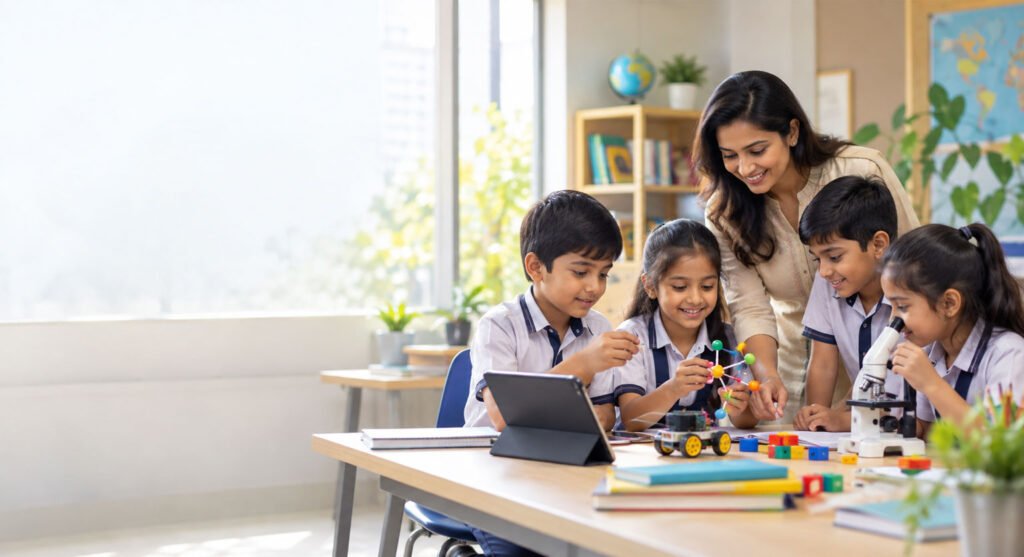
A future-ready classroom does not abandon traditional academic learning. Reading, writing, mathematics, science, and social understanding remain essential. The difference is in how students use those foundations.
Instead of treating knowledge as a collection of answers, future-ready education encourages students to connect concepts, investigate possibilities, and apply learning to real situations. This approach helps students move from passive learning toward active participation. They become more comfortable with asking why, testing ideas, learning from mistakes, and explaining their thinking.
Building Strong Thinking Skills
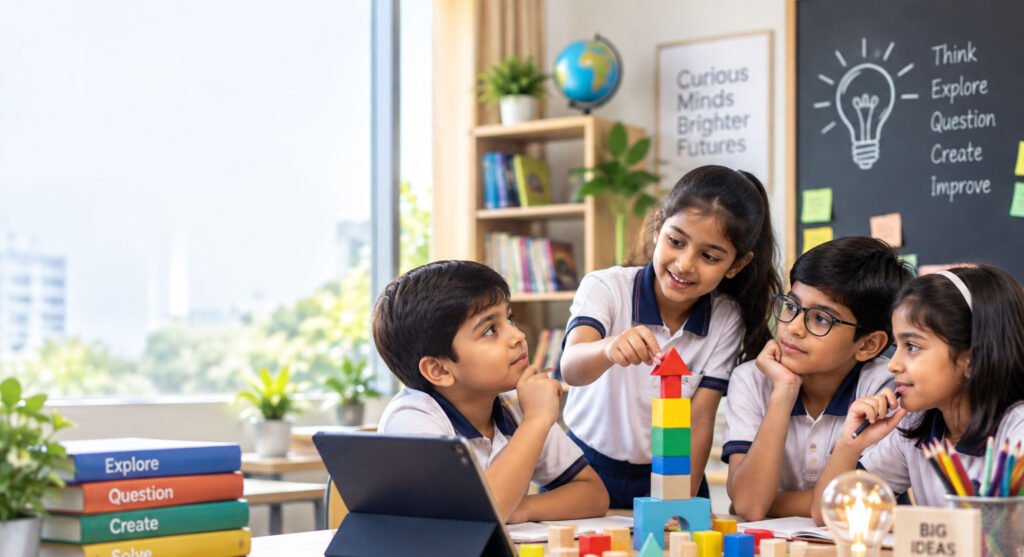
One of the most valuable outcomes of education is the ability to think independently. Future-ready students need more than quick recall. They need to evaluate information, identify patterns, compare possibilities, and make reasoned decisions.
Critical thinking activities can make these skills part of everyday learning. Students might investigate how to improve a classroom process, design a simple structure, explore a scientific question, or work through a practical challenge. Such experiences allow them to understand that problems may have several possible solutions.
Critical thinking also becomes increasingly important in a digital world. Children encounter information through websites, videos, social platforms, apps, and artificial intelligence tools. Learning how to question sources, recognize context, and distinguish reliable information from unsupported claims is an important part of modern education.
Technology With Purpose
Technology can expand learning, but technology itself should not become the objective. Future-ready education uses digital tools when they make learning more engaging, collaborative, accessible, or practical.
Students can use technology to research topics, create presentations, explore simulations, develop digital projects, communicate ideas, and collaborate on assignments. When used thoughtfully, these experiences can help children become confident digital learners rather than passive consumers of screens.
Communication and Collaboration
Future careers will require people to work with different teams, perspectives, and cultures. Students therefore need opportunities to communicate clearly and collaborate respectfully from an early age.
Communication skills develop through group projects, discussions, presentations, performances, creative activities, and peer learning. These experiences help children listen, divide responsibilities, negotiate differences, and contribute toward a shared outcome.
Communication is broader than speaking confidently. It includes listening carefully, writing clearly, asking questions, understanding another person’s viewpoint, and adapting a message for different audiences. These skills support academic learning while also helping children participate positively in their communities.
Creativity and Curiosity
A future-ready education gives students room to imagine, experiment, and create. Creativity is not limited to art or music. It is also involved in scientific discovery, engineering, entrepreneurship, communication, and problem-solving.
When students are encouraged to explore more than one approach, they begin to see learning as a process rather than a fixed answer. Open-ended activities can help them develop curiosity and resilience. A project may not work on the first attempt, but the experience of revising it can be more valuable than simply receiving the correct answer.
For younger children, this can begin with play, stories, building activities, drawing, music, exploration, and conversations. Parents looking for the Best preschool in Miyapur can therefore consider whether a learning environment gives children opportunities to investigate and create rather than focusing only on worksheets and memorization.
Emotional and Social Development
Academic knowledge is only one part of being prepared for life. Children also need to understand their emotions, build relationships, handle setbacks, and develop confidence.
Emotional development can be supported through classroom routines, collaborative activities, reflection, communication, and positive guidance. Children can learn to express feelings, resolve disagreements, show empathy, take responsibility, and ask for help when needed.
These abilities matter because future learning is not always easy. Students will encounter unfamiliar subjects, changing expectations, mistakes, and moments of uncertainty. Emotional resilience can help them respond constructively instead of giving up when something becomes difficult.
Learning Beyond the Classroom
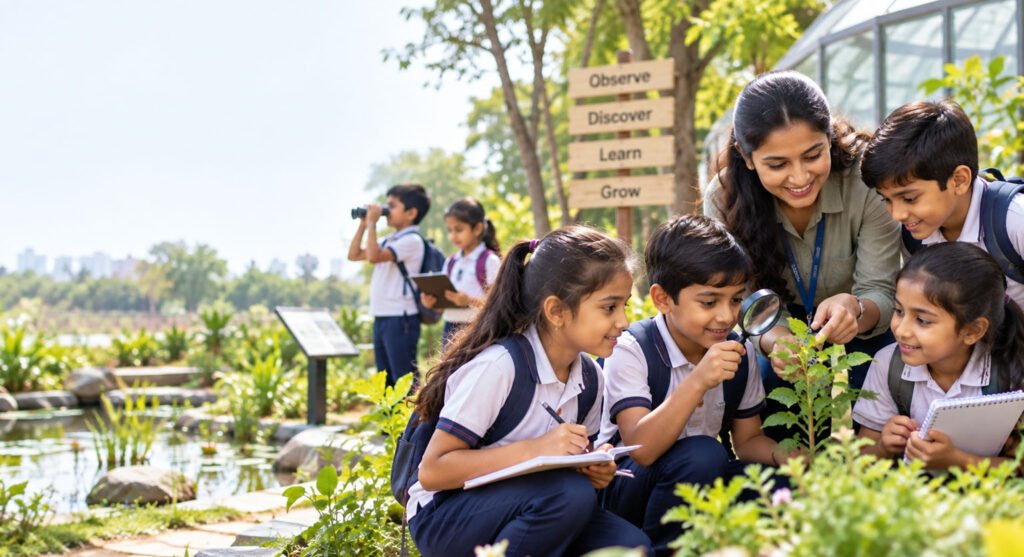
Academic foundations deserves practical attention because students learn through repeated experiences. Schools can strengthen this area by setting clear goals, giving learners time to practise, using examples that feel relevant and inviting reflection after activities. Parents can look for evidence rather than promises: observe how students participate, ask how teachers give feedback, and understand how the school responds when a learner needs encouragement or a new strategy. A thoughtful approach also recognises that progress is gradual. Children may begin with support and become increasingly independent as they gain confidence.
The Role of Teachers
Future-ready education still depends on excellent teachers. Technology and modern resources cannot replace the role of an educator who understands how children learn and how to encourage their development.
Teachers can act as facilitators, mentors, questioners, and guides. They can create classrooms where students feel comfortable sharing ideas, making mistakes, and trying again. They can also identify individual strengths and provide opportunities for students to develop at their own pace.
For parents, this makes teacher interaction an important part of evaluating a school. Look beyond facilities and ask how educators support curiosity, communication, independence, and individual progress.
What Parents Should Look For
When choosing a school, parents can look for a balanced educational approach rather than a single feature. Useful questions include:
Does the school build strong academic foundations?
Are students encouraged to understand concepts instead of relying mainly on memorization?
Are technology and digital resources used purposefully?
Do children participate in projects, practical activities, arts, sports, and collaborative learning?
How does the school support emotional and social development?
Are students encouraged to communicate, question, create, and solve problems?
Does the learning environment help children become increasingly independent?
These questions can provide a clearer picture of whether a school is preparing children for long-term learning rather than only immediate academic performance.
Creating Lifelong Learners
The ultimate goal of future-ready education is not to predict exactly what jobs today’s children will have. Technology, industries, and career paths will continue to change. A stronger goal is to develop learners who can adapt.
Students who know how to learn, question, communicate, collaborate, create, and reflect can respond to new situations with greater confidence. They can acquire new knowledge when circumstances change and apply existing knowledge in unfamiliar contexts.
This mindset begins early. A preschool child who is encouraged to ask questions and explore their surroundings is already developing habits that can support learning for years. As children progress through school, those habits can become deeper research skills, independent thinking, creativity, leadership, and responsible decision-making.
Conclusion
Future-ready education is about preparing students for a changing world without losing sight of the fundamentals that make learning meaningful. Strong academics, technology awareness, creativity, communication, collaboration, conceptual learning, and real-world experiences can work together to create a well-rounded educational journey.
For parents, choosing a school is an opportunity to consider the kind of learner their child can become. The right environment should encourage curiosity, provide meaningful challenges, support individual development, and help children connect knowledge with life beyond the classroom.
When education focuses on developing adaptable and confident learners, students are not simply prepared for the next examination. They are building the skills, attitudes, and curiosity needed to keep learning throughout life.