
LKG/PP1 Schools in Kukatpally: Building Strong First Steps for School Learning
The move into LKG or PP1 is an exciting stage for a young child. New classmates, classroom routines, stories, activities and discoveries begin to shape how children feel about learning. For families exploring LKG/PP1 schools in Kukatpally, the important question is not simply which school is closest. It is which environment will help a child feel secure, curious, capable and ready to participate.
Parents may also consider nearby Hydernagar, Miyapur, Hafeezpet and Madinaguda. A wider search can reveal programmes suited to a child’s needs and the family’s routine.
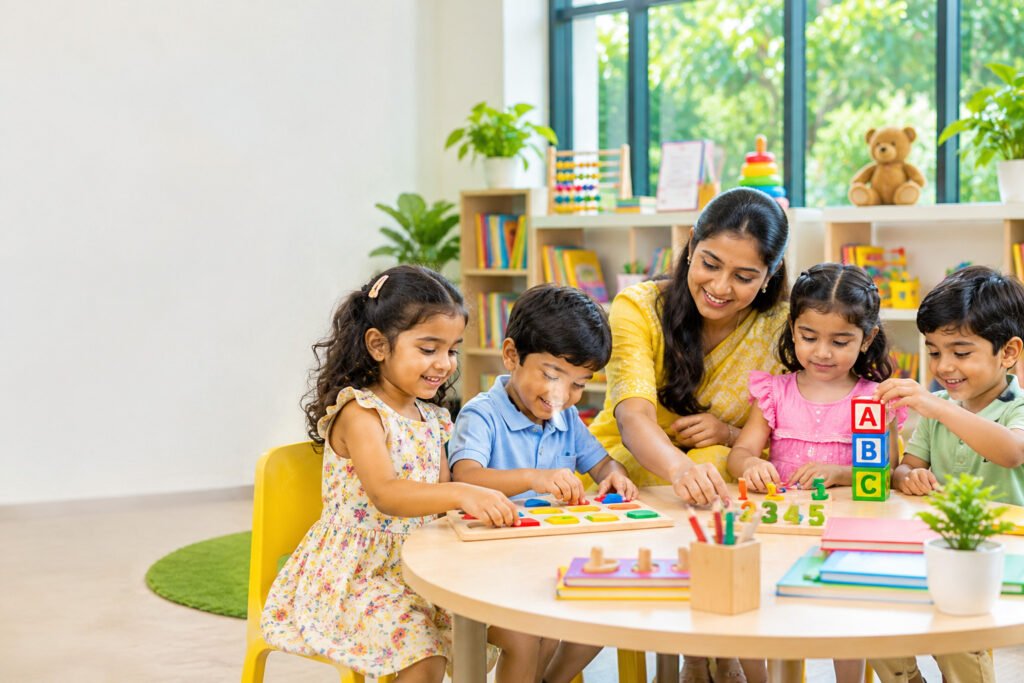
What Children Need at the LKG/PP1 Stage
LKG, often called PP1 or Pre-Primary 1 by some schools, introduces children to a more organised learning routine. Naming conventions and age requirements differ, so parents should confirm each school’s class structure and admission criteria. At this stage, children are generally developing early literacy, number awareness, communication, coordination, independence and the ability to work alongside others.
Learning should be active and age-appropriate. Children practise counting with objects, recognise sounds through rhymes, develop hand control by drawing and explain ideas after stories. These experiences connect concepts with real actions and make learning meaningful.
A well-planned pre-primary education programme gives children opportunities to practise skills repeatedly in different ways. It also recognises that children do not all learn at the same pace. Encouragement, observation and patient guidance are essential.
Five Signs of a Supportive LKG or PP1 School
1. Learning Has a Clear Purpose
Ask how teachers introduce language, early mathematics, environmental awareness and creative expression. Lessons should have clear learning goals while remaining playful and flexible. Children can explore letters with picture cards, compare quantities using counters, identify patterns with blocks and talk about familiar objects.
Request a sample timetable to see how activities build from one stage to the next. A meaningful school curriculum balances guided learning, discovery and creative experiences.
2. Teachers Notice Every Child
Young learners need adults who pay attention to their questions, interests and changing confidence. During a visit, notice whether teachers speak respectfully, give simple instructions and encourage children to try tasks independently. Ask how the school supports a child who is shy, unsettled or finding an activity difficult.
Ask how progress and concerns are shared with parents, and whether families receive suggestions for supporting learning at home.
3. Language Is Developed Every Day
Children strengthen communication through conversation, storytelling, songs, picture discussions and opportunities to describe what they see. Early phonics activities can help them notice sounds and connect them with letters. These experiences should be enjoyable and should not create pressure to read before a child is ready.
Ask about story sessions, rhymes, vocabulary activities and group conversations. A strong early literacy programme builds listening, speaking and reading readiness.
4. Children Learn to Think with Numbers
Early mathematics is more than writing numerals. Children begin to understand quantity, order, shape, size, comparison and patterns through practical activities. Sorting buttons, counting steps, matching shapes and arranging objects by size can introduce mathematical ideas naturally.
Ask how teachers use practical materials and check understanding. Early numeracy skills grow through exploring, explaining and practising.
5. Social Growth Is Part of the Day
At this age, children are learning to share resources, wait for a turn, follow group instructions and express feelings. Group projects, pretend play, music, movement and classroom responsibilities provide everyday practice.
Ask how teachers guide disagreements and include quieter children. Social and emotional development grows through kindness, routines and respectful interactions.
Check the Campus, Not Just the Brochure
A campus visit helps parents understand how a school operates. Ask how teachers adapt activities for different abilities and encourage independence through daily responsibilities, such as choosing books, tidying materials and caring for classroom resources every day. Look for clean, well-ventilated classrooms, age-appropriate furniture, accessible learning materials and safe spaces for movement. Check washrooms, drinking-water arrangements, play equipment, entry procedures and the way children are supervised.
Ask about visitor access, authorised pick-up, emergency response, first aid and health procedures. If transport is needed, confirm routes, timings, vehicle supervision and communication arrangements. Safety includes emotional wellbeing as well as physical protection, so notice how staff interact with children.
A child-friendly classroom offers accessible materials and room to move. Libraries, art areas and gardens add value when used regularly.
Questions to Ask Before You Apply
Parents comparing schools can use a simple set of questions during visits:
- What age criteria apply for LKG or PP1 admission?
- How many children are there in each class?
- What is the teacher-to-child arrangement?
- How are learning and developmental progress observed?
- How much time is provided for outdoor play and creative activities?
- What are the school timings, fees and transport options?
- How are parents updated about classroom activities and concerns?
Ask how the school helps new children settle. Understanding the preschool admission process early gives families time to prepare documents.
Consider the Daily Journey
Check travel time during school hours, traffic, pick-up points and transport availability. The schedule should allow enough time for sleep, breakfast and play.
Families searching for schools near Kukatpally may find suitable options in neighbouring localities. A school a little farther away can still be practical if the route is reliable and the programme meets the child’s needs. The best decision balances educational quality with a manageable family routine.
An Option for Families Around Kukatpally
Parents may also explore Fountainhead Global School in Hydernagar, Miyapur. The school describes a pre-primary pathway that includes Playgroup, Nursery, LKG and UKG. Its PP I information refers to phonics revision and early reading development, including words, phrases and simple sentences through classroom, computer-based and group activities.
The school’s early-years approach also describes stories, teaching aids, real objects and theme-based experiences. Its wider learning environment includes arts and crafts, indoor and interactive play areas, a language lab and a vegetable garden. Parents should ask which facilities and activities are specifically available to PP1 children during the current academic year.
Explore the Fountainhead Global School pre-primary programme online or through a campus visit. The school is at Dreamview, HMWS & SB Road, Hyder Nagar, Miyapur, Hyderabad, Telangana 500049. Check travel time from home.
Contact admissions to confirm LKG and PP1 admissions, age eligibility, availability, fees, timings, transport and documents.
Help Your Child Feel Ready
At home, read picture books, sing rhymes, count toys and encourage drawing. Practise washing hands, organising belongings and asking for help.
Talk positively about teachers and classmates. Share your child’s interests and routines with the teacher. A calm start can build confidence.
Conclusion
Choosing among LKG/PP1 schools in Kukatpally means looking carefully at teaching, language and number foundations, safety, teacher attention, social development and daily convenience. Visit shortlisted campuses, ask practical questions and consider how each programme supports your child’s personality and readiness.
Fountainhead Global School in Hydernagar, Miyapur is one nearby option families can explore. The right choice is the school where your child can feel welcomed, discover new interests and build a positive foundation for the years ahead.
Call to Action
Enquire About the PP1 Programme
To learn more about the pre-primary programme, contact Fountainhead Global School and arrange a conversation or campus visit.
Address: Dreamview, HMWS & SB Road, Hyder Nagar, Miyapur, Hyderabad, Telangana 500049
Phone: +91 8008885254 | +91 8008001224
Website: https://fhgs.in
Frequently Asked Questions
1. What is the difference between LKG and PP1?
LKG means Lower Kindergarten, while PP1 means Pre-Primary 1. Many schools use these terms for a similar early-learning stage, but class names and admission criteria can vary.
2. What is the right age for LKG or PP1 admission?
Age requirements differ between schools and academic years. Parents should check the school’s current admission policy and confirm the required age and eligibility documents.
3. What do children learn in LKG or PP1?
Children develop early language, phonics, reading readiness, number recognition, basic mathematics, communication, creativity and social skills through structured activities and practical experiences.
4. What should parents check before selecting an LKG school in Kukatpally?
Parents should evaluate teaching methods, teacher experience, safety, classroom facilities, student support, transport, fees and communication with families. Visiting the campus is recommended.